Founder & Trauma Therapist
Mohamad Shabib — Trauma Therapist, Online Across Six Provinces
MACP, CCC, Registered Psychotherapist (Qualifying), CRPO — Ontario
Registration numbers, so you can check them yourself: Registered Psychotherapist (Qualifying) CRPO #14298 on the CRPO public register, and Canadian Certified Counsellor CCC #11249205 in the CCPA directory. Neither is a licence: the CRPO registration applies in Ontario, and the CCC is a voluntary national certification.
Mohamad came to counselling through crisis response, First Nations community mental health, refugee outreach and addictions treatment, and founded TEO Counselling Services in 2022.
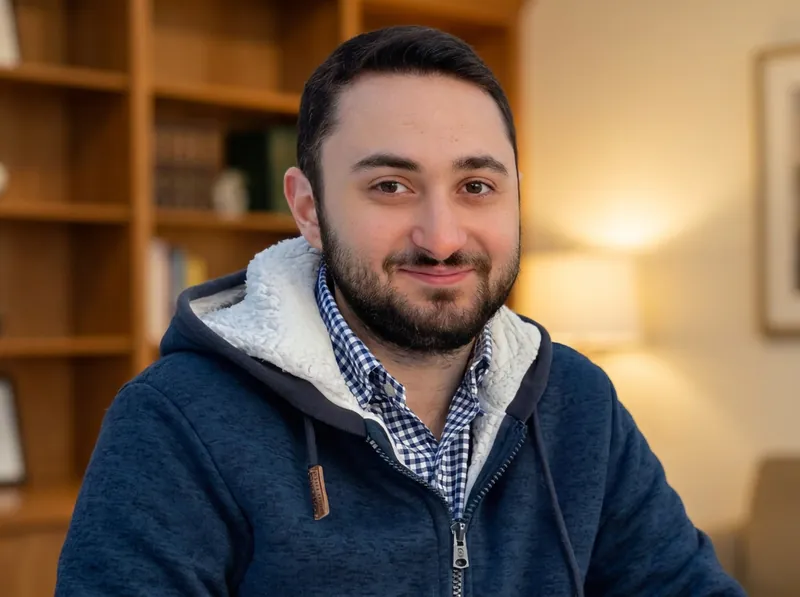
Mohamad Shabib
MACP, CCC, Registered Psychotherapist (Qualifying), CRPO — Ontario
✓ Canadian Certified Counsellor (CCC #11249205, CCPA — a national voluntary certification)
✓ Registered Psychotherapist (Qualifying), CRPO #14298 — Ontario
✓ Advanced EMDR (EMDRIA)
✓ IFS Level 1 & 2
✓ Gottman Method Level 1 & 2
✓ CBT for Trauma Level 1 & 2
✓ Graduate diploma in addiction treatment and prevention
✓ Concurrent trauma & addictions experience
✓ Therapy in English & Arabic
Mohamad Shabib, at a glance. Mohamad Shabib, MACP, CCC, founded TEO Counselling and works online with clients in British Columbia, Ontario, Alberta, Saskatchewan, Manitoba and Newfoundland and Labrador, in English or Arabic. He is a Registered Psychotherapist (Qualifying) with the CRPO in Ontario (#14298) and a Canadian Certified Counsellor with the CCPA (#11249205), with Advanced EMDR training through an EMDRIA-approved programme, IFS Levels 1 and 2, and the Gottman Method and CBT for Trauma, both at Levels 1 and 2. Individual sessions are $150 and couples sessions $175, each 60 minutes, with no intake or assessment fee; no provincial health plan covers counselling in private practice, every session comes with an insurance-ready receipt, and direct billing is available with him for Pacific Blue Cross and TELUS eClaims plans (Canada Life, Manulife). The first step is a free 15-minute consultation on a video call or a scheduled phone call, no referral needed.
Also at TEO Counselling Services: Alison Shaji, MA Clinical Psychology, RCC (BCACC) — individual and couples counselling in English, Hindi or Malayalam, for clients in British Columbia; Rola Shbib, BSW (Hons), RSW (Ontario) — grief, crisis and addictions support for individuals in English, in all six provinces. Every enquiry starts with the same free 15-minute consultation, which sorts out who you see.
My story
Mohamad Shabib did not come to counselling through a textbook. He came through years of sitting with people in the hardest moments of their lives — in refugee camps in Beirut, in First Nations communities in northern BC, in crisis response units, and in addictions treatment. By the time he founded TEO Counselling Services in 2022, he had spent nearly a decade learning what it actually takes for a person to begin healing.
That breadth of experience shapes everything about how Mohamad works. He holds a Master's in Counselling Psychology and is a Canadian Certified Counsellor (CCPA, a national voluntary certification) and a Registered Psychotherapist (Qualifying), CRPO — Ontario. He brings advanced training in EMDR and training in Internal Family Systems (IFS), the Gottman Method, Cognitive Behavioural Therapy for trauma, and Motivational Interviewing and CBT for Addictions — approaches that he adapts to what each individual actually needs, rather than applying a single formula.
Before founding TEO, Mohamad worked as a Mental Health Counsellor serving three First Nations communities through NIFCS in Terrace, BC. He also worked in crisis first response at the Island Crisis Care Society, supporting people through suicidal crises and psychiatric emergencies. Most recently, he served as a Trauma Counsellor at Edgewood in Nanaimo, working with first responders through a specialized concurrent trauma and addictions program — a role that required both clinical precision and a deep understanding of how people who spend their lives helping others can struggle the most to ask for help themselves. His earlier work included volunteering in Beirut between 2016 and 2017, helping Syrian refugees integrate through mental health outreach, and later supporting that same community's resettlement in Canada.
That personal and professional history means Mohamad understands displacement, collective trauma, and the particular weight carried by those in high-stress roles — not just conceptually, but from genuine proximity.
He offers therapy in both English and Arabic and works entirely virtually, making his care accessible to individuals and couples in British Columbia, Ontario, Alberta, Saskatchewan, Manitoba, and Newfoundland & Labrador. He also practises as a Muslim therapist, offering faith-informed support to clients across all six provinces.
If you have been wondering whether therapy is really for you, or whether you will find someone who truly understands your experience — Mohamad built TEO with exactly that question in mind.
Therapeutic approach
Therapy is not one-size-fits-all. Mohamad tailors each approach to what you actually need — drawing from a broad toolkit of evidence-based methods.
EMDR
Eye Movement Desensitization & Reprocessing
An evidence-based approach for processing traumatic memories, reducing their emotional impact, and helping the brain reintegrate difficult experiences.
IFS
Internal Family Systems
Explores the different 'parts' of yourself — including those shaped by trauma — with the aim of helping them unburden painful emotions.
Gottman Method
Gottman Method Couples Therapy
A research-backed approach to couples therapy focused on improving communication, rebuilding trust, and deepening emotional connection.
CBT
Cognitive Behavioural Therapy for Trauma
Identifies and reshapes unhelpful thought patterns that emerged in response to traumatic experiences, building healthier ways of thinking and coping.
IFOT
Indigenous Focused Oriented Therapy
Culturally sensitive care that honours Indigenous healing practices and integrates them into clinical work.
DBT
Dialectical Behaviour Therapy
Skills-based therapy for emotional regulation, distress tolerance, and building interpersonal effectiveness.
Where to start with Mohamad: online trauma therapy · EMDR therapy online in BC · EMDR therapy online in Ontario · IFS therapy online · online couples counselling in BC · online couples therapy and marriage counselling · online therapy in Ontario
Areas of practice
Articles by Mohamad
Articles under Mohamad's name cover trauma, grief, men's mental health, relationships and the practical side of therapy in Canada (cost, coverage and credentials). Each is general information, not personal advice; most end with a Sources list of the research they draw on.
- 7 Signs of Unresolved Trauma in Adults, and First Steps · Trauma & PTSD
- Trauma Bonding: What It Is, the Signs, and How to Break a Trauma Bond · Trauma & PTSD
- What Are the Six Stages of Grief? Where They Came From and What They Miss · Mental Health
- Depression in Men: The Signs That Get Missed, and What Can Help · Men's Mental Health
- The Father Wound: Signs, Effects in Adult Life, and What Helps · Men's Mental Health
- Does Couples Therapy Work? An Honest Look at the Evidence · Relationships
- How Much Does Therapy Cost in Canada? Fees, Coverage and Free Routes · Finding Help
- Why Professional Credentials Matter When Choosing a Therapist · Mental Health
Topics: Book Guides (24) · Mental Health (18) · Finding Help (10) · Trauma & PTSD (9) · Relationships (6) · Therapy Approaches (5) · Men's Mental Health (4) · Getting Started (2) · Psychology Research (2) · Addictions Recovery (1) · Faith & Mental Health (1)
82 articles →Session details
What working together actually looks like
The first session is mostly listening. You describe what brought you here in whatever order it comes out — it does not need to be organised, and you do not have to start at the beginning. What I am doing while you talk is working out what is driving the thing you came about, which is not always the thing you expected to be talking about.
From there we agree a direction rather than a script. If structured trauma work is going to be part of it, that does not begin on day one. It begins when there is enough stability and enough trust in the room for it to be worth doing, and you will know it is coming because we will have discussed it.
I am fairly direct. If I think something is not working, or that a different kind of support would serve you better, I will say so rather than let sessions drift. Some people find that a relief and some find it abrupt — it is worth knowing in advance which you are.
What you say in session is kept confidential, with four limits, named up front: a risk of serious harm to you or someone else; a child who may be being abused or neglected; a court order or subpoena; and abuse by a regulated health professional. Those are explained in full in the first session, before anything sensitive is discussed.
Working in Arabic
Sessions run in English or Arabic, and you can move between them mid-sentence. That matters more than it sounds. Some of what people need to say about family, shame, faith and obligation exists in one language and not the other, and translating it in your head first costs something — the part that was hardest to say.
It also means not having to explain the context around the content: what is expected of an eldest son, why a particular thing could not be said to a parent, what it costs to be the one who left. If you have done therapy before in a second language and found yourself editing, that is the difference.
This work sits alongside Arabic-speaking therapy and faith-informed work for clients who want it, and is equally available to clients who want neither.
Who I tend to work well with
People carrying something from a long time ago that has started showing up in the present — in sleep, in temper, in the distance from people they love. People who function well on the outside and are exhausted by what it costs. First responders and others whose work has accumulated more than one difficult thing. Couples who keep having the same argument in different clothes.
And, honestly, people who are sceptical about therapy. Scepticism is not an obstacle here; it can mean someone will tell me when something is not landing, which helps the work along.
Where I am probably not the right fit
If you need a formal diagnosis or psychological assessment, that is a psychologist or physician, not a counsellor — I do not diagnose. If you need to meet face to face, this is a virtual practice and always will be. If your only workable hours are mornings, the schedule will not fit. Better to know any of that now than three sessions in.
Booking a session with Mohamad
Individual sessions are $150 for sixty minutes; couples sessions are $175. The first conversation is free — 15 minutes, no referral needed, and no obligation at the end of it.
No provincial health plan in Canada covers counselling in private practice. Whether an extended health plan reimburses sessions with Mohamad depends on whether it covers his designations: Canadian Certified Counsellor (CCC) or, in Ontario, Registered Psychotherapist (Qualifying). Full detail is on the fees page. Direct billing is available with Mohamad for Pacific Blue Cross, CVAP and plans on the TELUS eClaims network; otherwise you receive an insurance-ready receipt after every session.
Sessions run seven days a week from noon to 9pm Pacific. Cancellations need 24 hours notice; later than that, and missed sessions, are charged in full.